Our ApprOach
Educational priorities become lasting outcomes through thoughtful implementation.

Policy. Practice. Implementation.
Our work is governed by three key pillars.
Pillar 1: Local Sovereignty
MCLG approaches implementation by focusing on governance, leadership, culture, and evidence. with the downstream impact resulting in long-term success and sustainability. While every engagement is shaped by local context, the objective remains consistent: helping organizations translate priorities into practice.
Pillar 2: Validated FrameworkS
Every engagement is informed by experience across public education, international schools, federal education systems, and ministry-supported initiatives, bringing a consistent methodology to varied educational environments.
Pillar 3: Evidence-Based Decision Support
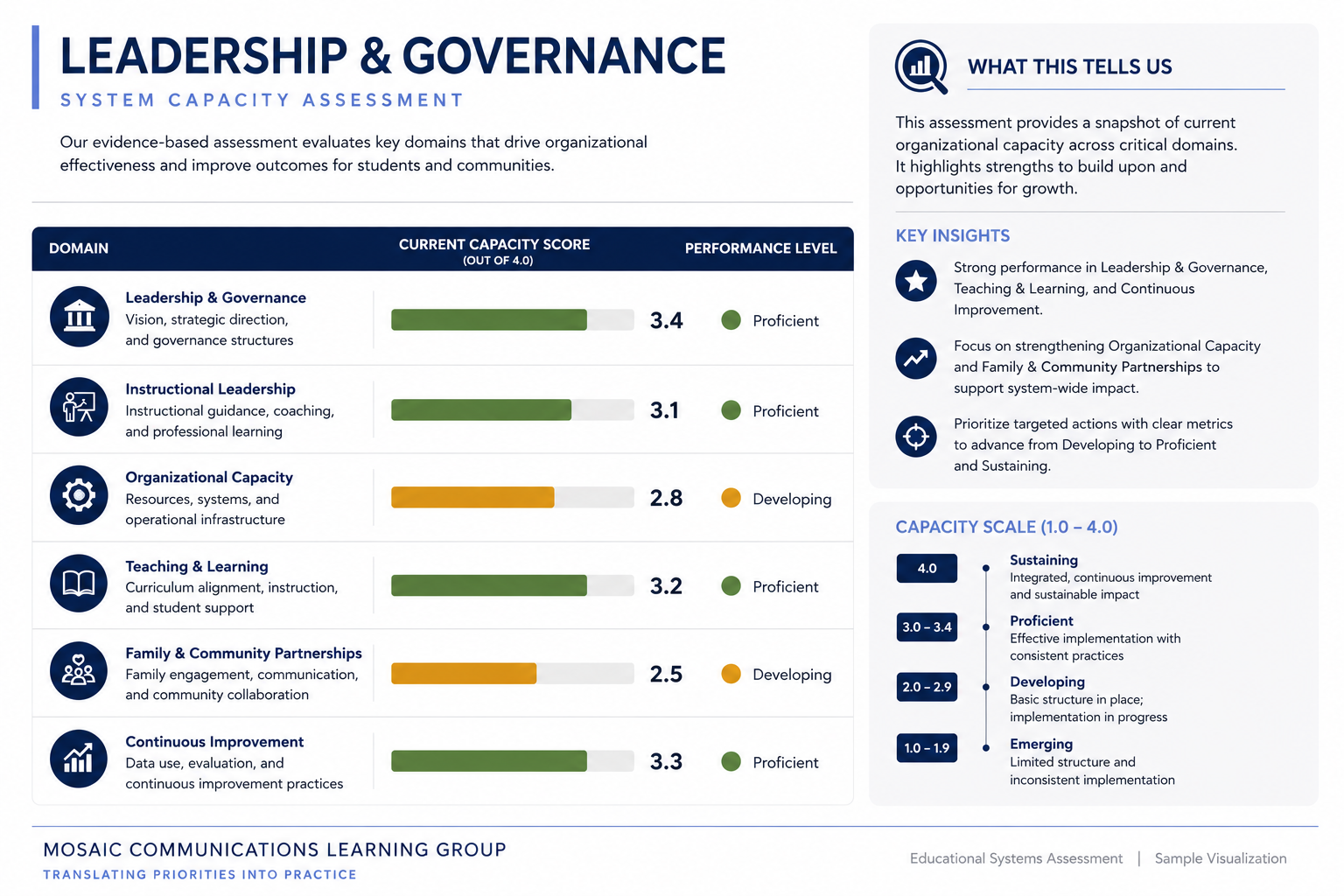
MCLG examines available evidence, organizational practices, implementation conditions, and stakeholder perspectives — triangulating data to identify strengths, challenges, and opportunities for improvement.
Evidence-Based Approach
Decision-making grounded in evidence and educational best practices
MCLG triangulates data across organizational data, student achievement trends, system capacity, and stakeholder input to support education leaders with clear and actionable direction.